What If the Witches Were Right?
A little witchcraft, a little imagination, and the wonderful possibility that magic might be more than make-believe.
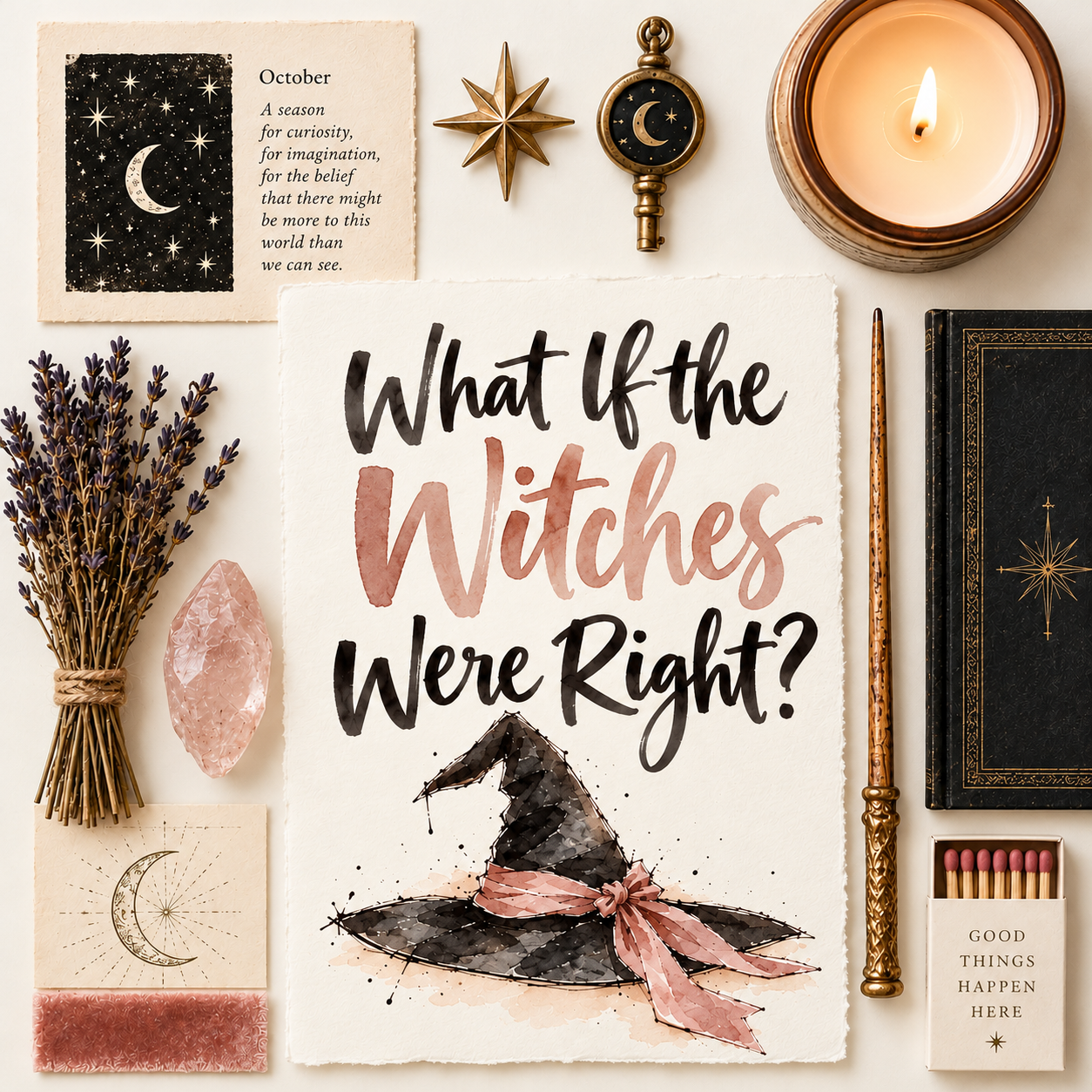
Every October, the witches return. They appear in shop windows, on television screens, and perched along front porches. And, if the stories are to be believed, you'll see them flying across the moon. We dress like them, decorate our homes with them, and revisit stories we've known since childhood with them. For a few weeks, we're perfectly happy to entertain the possibility of spells, extraordinary powers, and the occasional act of hocus pocus. Whatever their particular talents, we've never quite lost our fascination with them.
And I couldn’t help but wonder why.
Of all the magical characters that have occupied our imaginations, the witch has enjoyed a particularly remarkable existence. She has traveled through centuries of folklore, fairy tales, and books, finding her way into one generation's imagination after another. Her appearance may change, and so may the stories we tell about her, but the enchantment has always remained. There's something irresistible about a character who seems to possess an understanding of the world that the rest of us haven't quite figured out, who can make extraordinary things happen as though magic were simply another part of being alive.
Perhaps that's part of her appeal. The witch has magic in her, and what a wonderful thing that must be.
Imagine knowing that somewhere within you exists an ability to make the extraordinary happen, that the world holds possibilities other people haven't even considered.
A wand might come in handy, and a spellbook certainly has its charms, but the magic belongs to her. She doesn't concern herself with whether what she's attempting is particularly realistic. In her world, the impossible is simply something that hasn't been attempted yet.
And isn't that an enchanting thought?
Of course, most of us have long since accepted that a broomstick is unlikely to get us across town, no matter how late we're running, although I wouldn't be entirely opposed to discovering otherwise. But somewhere between childhood make-believe and adult practicality, I wonder whether we've become a little too certain about what is and isn't possible.
October seems particularly well suited to entertaining such thoughts. We light the candles, settle in for another viewing of The House with a Clock in Its Walls, or find ourselves back in the Owens family kitchen in Practical Magic, where midnight margaritas and a little dancing seem perfectly reasonable ways to spend an evening. And then there's The Good Witch, with Cassie Nightingale and her peculiar way of knowing things before anyone else does. We've visited these worlds before, perhaps many times, but that hardly seems to matter. For a couple of hours, we get to entertain the wonderful possibility that magic might exist beyond the stories we love so much.
Books have been inviting us into these worlds for centuries, and there's something especially delightful about the freedom they give our imaginations. In Eleanor Estes's The Witch Family, two young girls create an entire world of witches through their drawings, giving life to characters and circumstances that exist first in their minds. It's a charming premise, and one that makes me think about how readily we once accepted the possibility of extraordinary things. A drawing could become a world, and a broom leaning against the kitchen wall might turn out to be capable of flight. We were rather good at making something out of almost anything, provided no one interrupted to ask what we were doing.
I wonder how much of that imaginative freedom has followed us into adulthood. We still picture things that haven't happened yet, dream of places we've never been yet, and sometimes manage to bring a thought into existence through little more than the determination to see what might become of it. A house begins in someone's imagination long before anyone can walk through its front door. A story can take shape in a writer's mind before its characters have names.
There's a certain magic to creating something that didn't exist the day before, even if we've grown accustomed to calling it work.
Of course, the magic that fills our favorite stories promises something rather different. It suggests that the world might hold a few surprises beyond anything we could dream up ourselves, which may explain why we're still drawn to enchanted places and peculiar happenings long after we've been assured we're old enough to know better. We've learned a great deal about how things work, and yet the thought that there might be something more has remained remarkably difficult to surrender.
The witch seems perfectly comfortable with that uncertainty, although I doubt she'd call it uncertainty at all. Magic comes as naturally to her as breathing. I rather envy that about her. She has no particular need to explain what she already knows to be possible.
And then there's the delightful unpredictability of her world. She might glance at a candle and watch the wick catch fire, or open the front door a moment before someone knocks, having known all along that they were coming. Perhaps she'll think of an old friend over breakfast, only to find them standing in her garden that afternoon. And while the rest of us might spend hours wondering how any of it happened, I imagine she'd simply invite her friend inside and put the kettle on.
Maybe that's what keeps bringing us back to these stories. We know the difference between a film and the world outside our windows, and we're perfectly capable of enjoying a fairy tale without expecting a fairy to turn up at the door. But I wonder whether some small part of us has ever stopped entertaining the possibility. After all, the world has surprised us before. Circumstances that were once considered impossible have become part of daily life, and there is still an astonishing amount we don't know.
Who's to say we've accounted for every last mystery?
So, as the witches make their annual return to our doorsteps and television screens, I find myself rather pleased that we've continued to make room for them. I love their enchanting houses, their eccentric and mysterious gardens, their enviable talents, and the wonderful suggestion that life might contain a little more magic than we've been led to believe. Whether that magic belongs entirely to the imagination or occasionally finds its way beyond it, I'm happy to leave the question open.
And should a woman in a pointed hat happen to fly past the window one October evening, I suppose it wouldn't hurt to look twice.
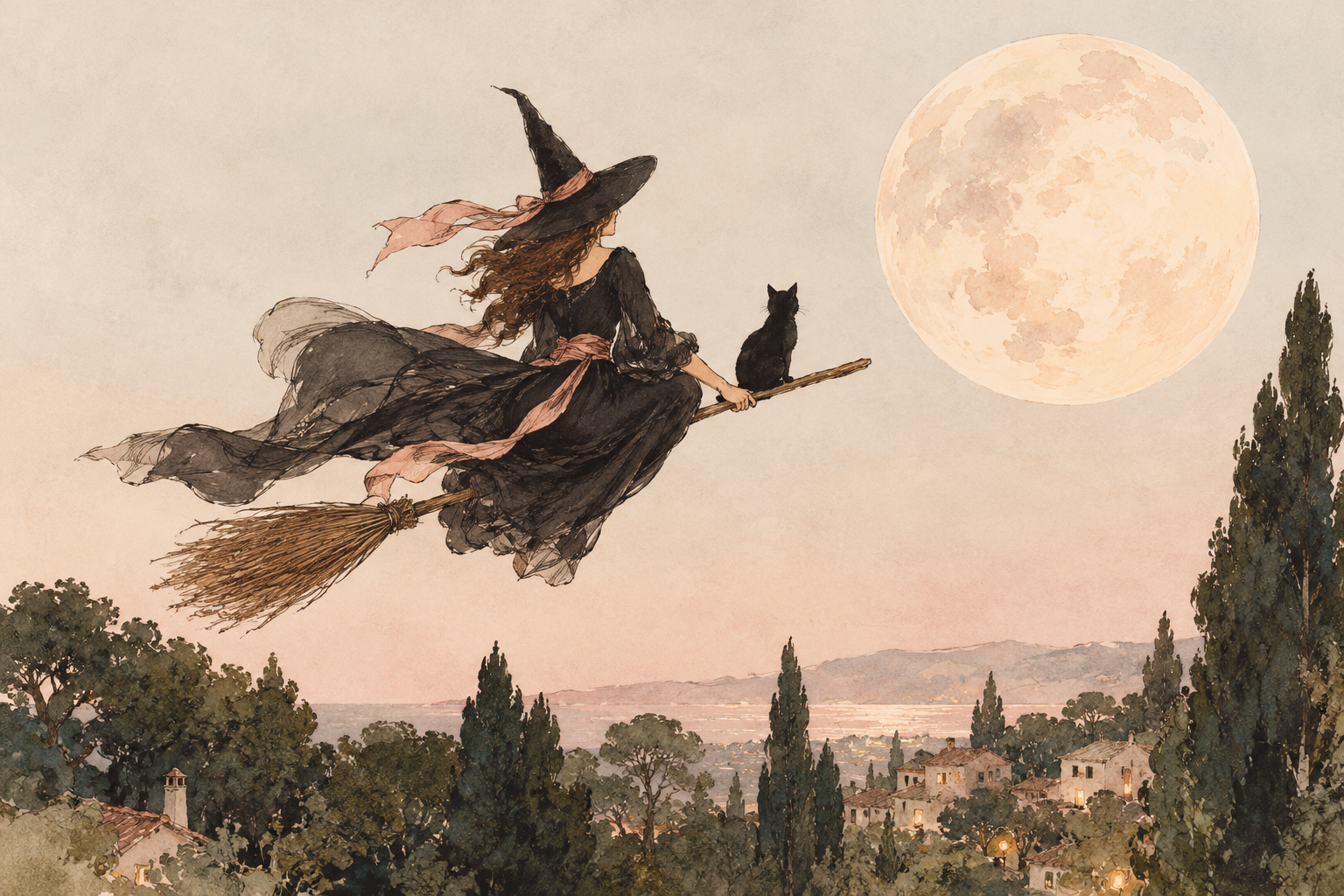
Witch Beneath the October Moon (2026). Original illustration created under the creative direction of Raychel Fox for Naturalist Way.
NATURALIST WAY
For the curious mind and the wandering imagination.
WRITTEN. LIVED. COLLECTED.
SOURCES & REFERENCES
The House with a Clock in Its Walls (2018). Directed by Eli Roth.
Practical Magic (1998). Directed by Griffin Dunne.
The Good Witch (2015–2021). Television series.
The Witch Family (1960). Eleanor Estes.
IMAGE CREDITS
Witch Beneath the October Moon (2026). Original illustration created under the creative direction of Raychel Fox for Naturalist Way.
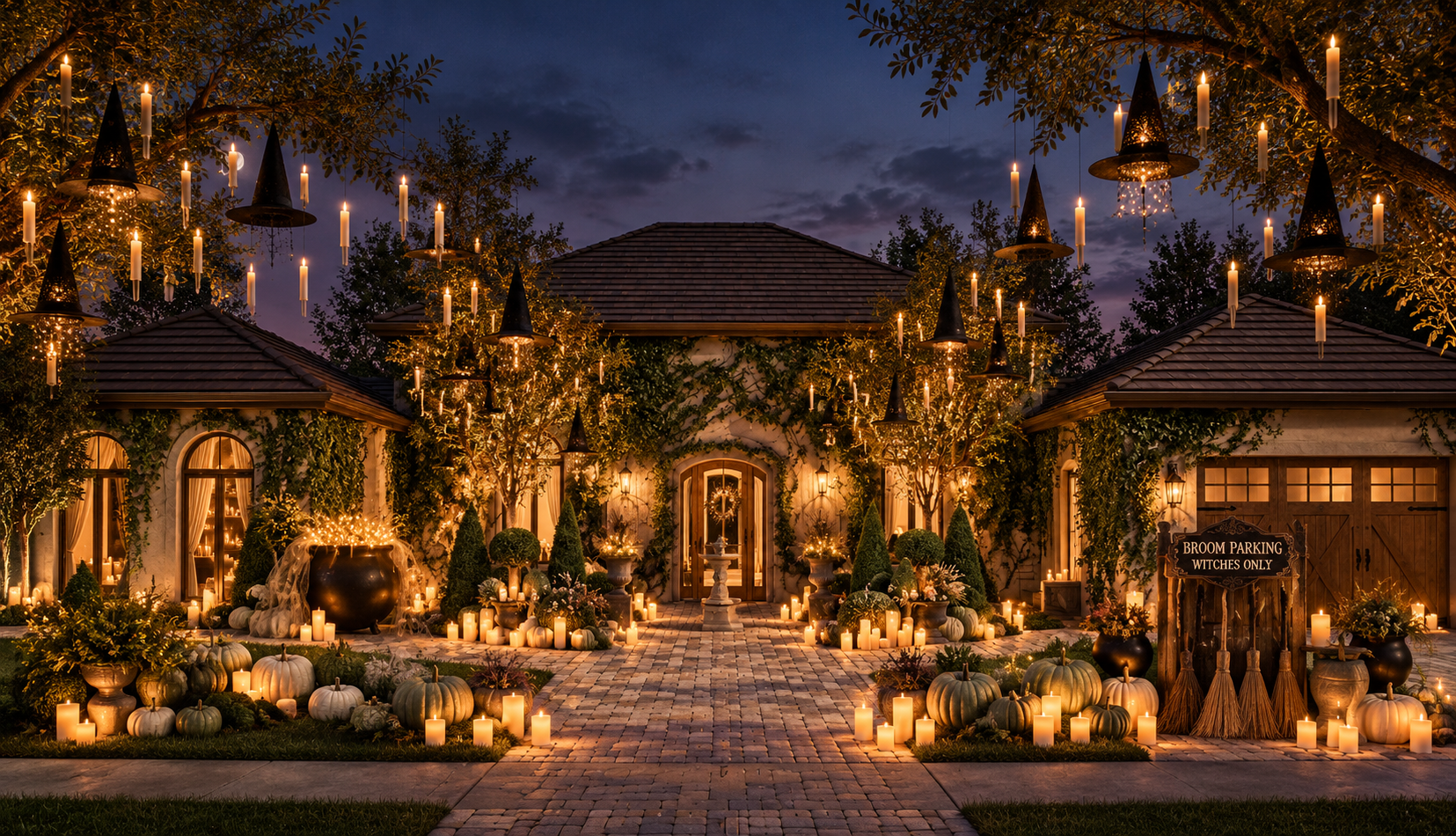
One-Story Home — Halloween Witch Theme (2026). Original home design and Halloween interpretation by Raychel Fox.